Entryway Design Tips to Transform Your Home’s First Impression by LXURI – Please note: Many or all of the products featured here are from our partners, who compensate us. This may influence which products we write about, as well as where and how they appear on a page. However, this does not influence our evaluations. Our opinions are our own.
Introduction
The entryway is one of the most important spaces in your home. It sets the tone for everything that follows. When guests walk through your front door, the entryway becomes their first impression of your home and your personal style. Therefore, thoughtful design choices can instantly create a welcoming atmosphere that feels both elegant and functional.
Creating an inviting entryway does not require a large space or a dramatic renovation. Instead, it relies on carefully chosen elements that combine beauty with purpose. Lighting, mirrors, storage, seating, and artwork all contribute to a polished and practical environment.
In this guide, we explore inviting entryway design tips that help transform even the simplest foyer into a stylish and welcoming space. From statement lighting to curated furniture pieces, each element works together to elevate your home’s entrance while maintaining everyday practicality.
Elevate Your Home
Start With a Welcoming Door Mat
Before guests even step inside, your entryway experience begins outdoors. A welcoming doormat sets the tone and serves an important functional purpose.
An outdoor mat protects your floors by catching dirt, water, and debris before they enter the home. However, it can also contribute significantly to your home’s overall aesthetic. Choosing a mat with a clean design or subtle texture creates a polished look that feels intentional rather than purely practical.
Neutral tones such as beige, charcoal, and natural fiber shades work particularly well. These colors complement most architectural styles while maintaining a timeless feel. Meanwhile, textured materials, such as woven fibres or geometric patterns, introduce subtle visual interest.
When selecting a door mat, consider the following design tips:
• Choose durable materials that withstand weather and daily use
• Select neutral colors that complement your exterior palette
• Opt for slightly oversized mats for a more luxurious appearance
• Layer with a larger outdoor rug for added dimension
Because the entryway begins outside, a thoughtfully chosen mat immediately signals warmth and attention to detail.


Elevate Your Home
Make a Statement With Entryway Lighting
Lighting plays a major role in creating an inviting entryway. In fact, statement lighting can transform a simple foyer into a striking architectural feature.
Many entryways rely on overhead lighting, which provides the perfect opportunity to introduce a decorative fixture. Chandeliers, lantern-style pendants, or sculptural flush mounts all add personality while improving illumination.
When selecting entryway lighting, scale matters. A fixture that is too small may feel underwhelming, while an oversized piece can overwhelm the space. Ideally, the lighting should feel balanced while drawing the eye upward.
Here are a few popular entryway lighting styles:
Pendant lights
Perfect for modern or minimalist spaces. A single pendant creates a clean focal point.
Lantern-style fixtures
Ideal for traditional or transitional homes. Lantern designs evoke classic European interiors.
Chandeliers
Best suited for larger foyers or homes with higher ceilings. Chandeliers add instant glamour and sophistication.
Flush mount lights
Great for smaller entryways with lower ceilings. They provide elegance without taking up visual space.
Meanwhile, warm lighting tones create a welcoming atmosphere. Soft white bulbs help avoid harsh shadows and produce a comfortable glow that feels inviting the moment you enter the home.
Elevate Your Home
Add Beautiful Storage Solutions
A well-designed entryway must balance aesthetics with functionality. This is where beautiful storage solutions become essential.
Daily essentials often accumulate near the front door. Keys, bags, shoes, coats, and umbrellas all require convenient storage. Without organization, however, clutter can quickly overwhelm the space.
Thoughtful entryway storage helps maintain a calm and welcoming environment while keeping everything easily accessible.
Consider incorporating the following storage elements:
Entryway Cubbies
Cubbies provide structured storage for shoes, bags, and everyday items. Families especially benefit from designated compartments for each household member.
Decorative Baskets
Woven baskets add texture and warmth while hiding everyday clutter. Use them to store scarves, gloves, or pet leashes.
Storage Boxes
Decorative boxes placed on console tables keep small items organized. They are perfect for sunglasses, mail, and spare keys.
Wall Hooks
Hooks allow coats, hats, and bags to remain accessible without requiring bulky furniture. Choose sleek metal or wood designs for a refined look.
Additionally, combining several storage elements creates layers of functionality while maintaining visual balance.


Elevate Your Home
Incorporate Artwork and Personal Touches
Artwork brings personality into an entryway while establishing a visual connection to the rest of the home.
Because the entryway acts as a transitional space, it benefits from carefully curated decorative elements. Artwork, framed photography, or family portraits help make the space feel personal and inviting.
Large statement pieces work well in spacious foyers. However, smaller entryways may benefit from gallery-style arrangements featuring several framed images.
Consider these styling approaches:
• One oversized artwork piece above a console table
• A symmetrical pair of framed prints
• A gallery wall of family photos
• Sculptural wall art that introduces texture
Meanwhile, selecting frames that complement your home’s design style ensures a cohesive appearance. Black frames create a modern look, while natural wood frames add warmth and softness.
Elevate Your Home
Define the Space With an Area Rug
An area rug instantly defines the entryway, especially in open-concept homes where the foyer flows directly into living areas.
Rugs help visually anchor furniture while adding comfort underfoot. Additionally, they introduce pattern, color, and texture that enhance the space.
Entryway rugs must also withstand heavy foot traffic. Therefore, durable materials such as wool or tightly woven blends perform best.
Design tips for selecting an entryway rug include:
• Choose low-pile rugs that allow doors to open easily
• Select durable materials suitable for high traffic areas
• Use patterned rugs to hide dirt and wear
• Ensure the rug extends beyond key furniture pieces
Furthermore, layered rugs can add depth and visual interest. For example, placing a patterned runner over a larger neutral rug creates dimension while maintaining functionality.


Elevate Your Home
Use Mirrors to Expand the Space
Mirrors are one of the most effective design tools in entryway interiors. They reflect light, expand visual space, and provide everyday convenience.
In smaller foyers, mirrors can make the area feel larger and brighter. Meanwhile, in larger entryways, mirrors act as striking decorative focal points.
When selecting a mirror, consider the following placement options:
Above a console table
This classic combination anchors the space while reflecting natural light.
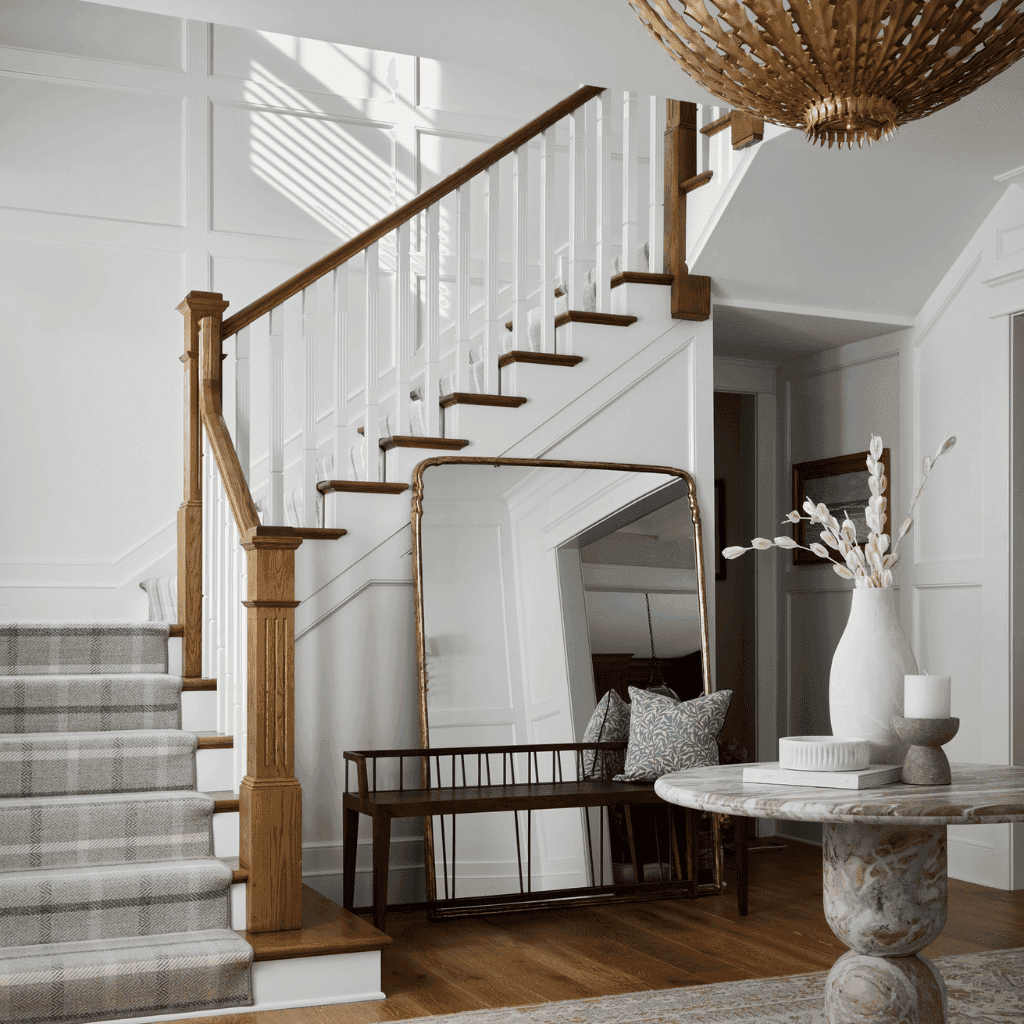
Full-length mirror
Perfect for quick outfit checks before leaving the house.
Clustered mirror arrangement
Creates a sculptural wall feature in contemporary interiors.
Additionally, mirror frames offer an opportunity to reinforce the overall design style. Minimal metal frames suit modern interiors, while carved wood frames complement traditional homes.
Elevate Your Home
Include Comfortable Seating
Seating may seem optional in an entryway, yet it dramatically improves the space’s functionality.
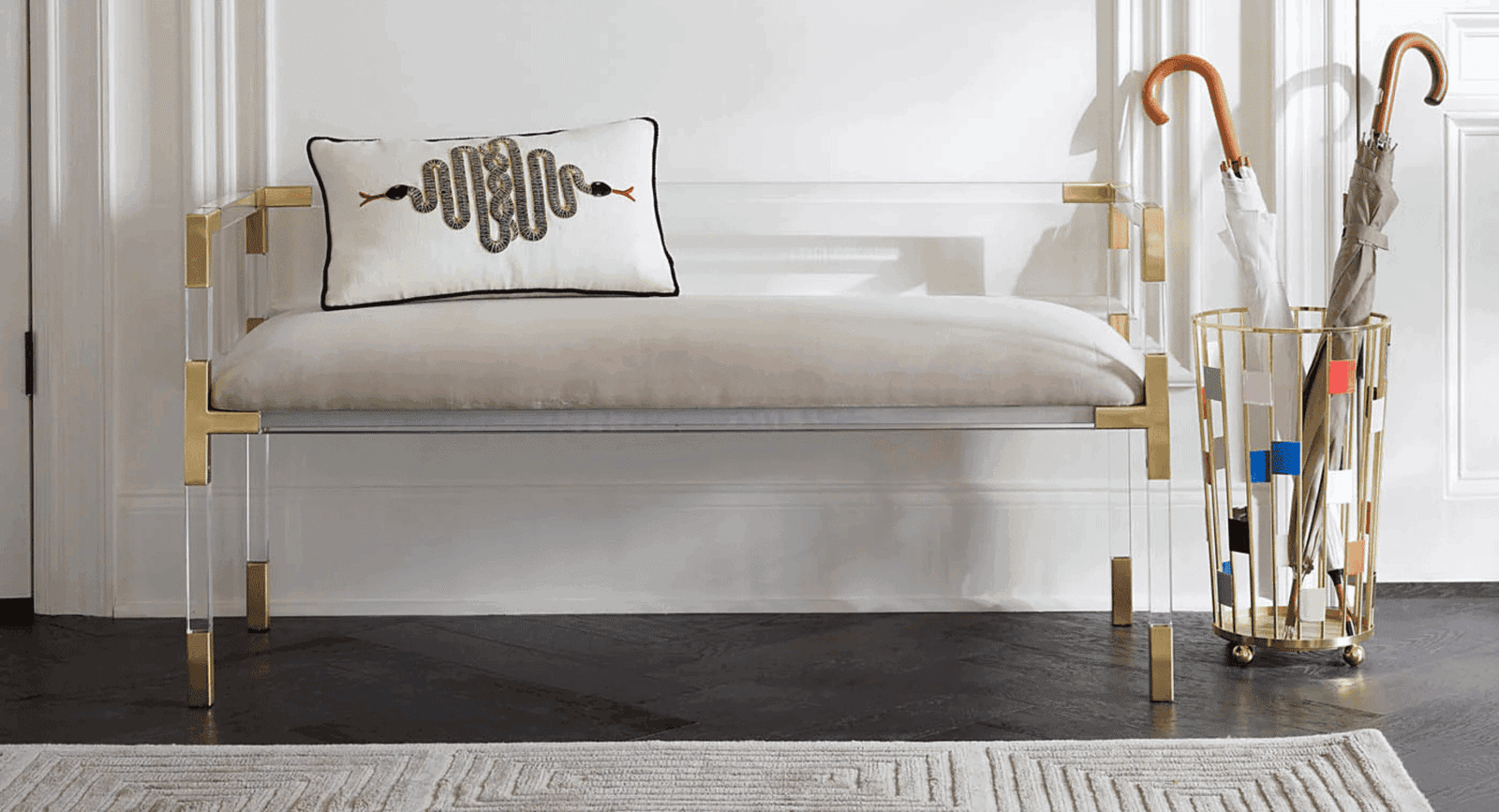
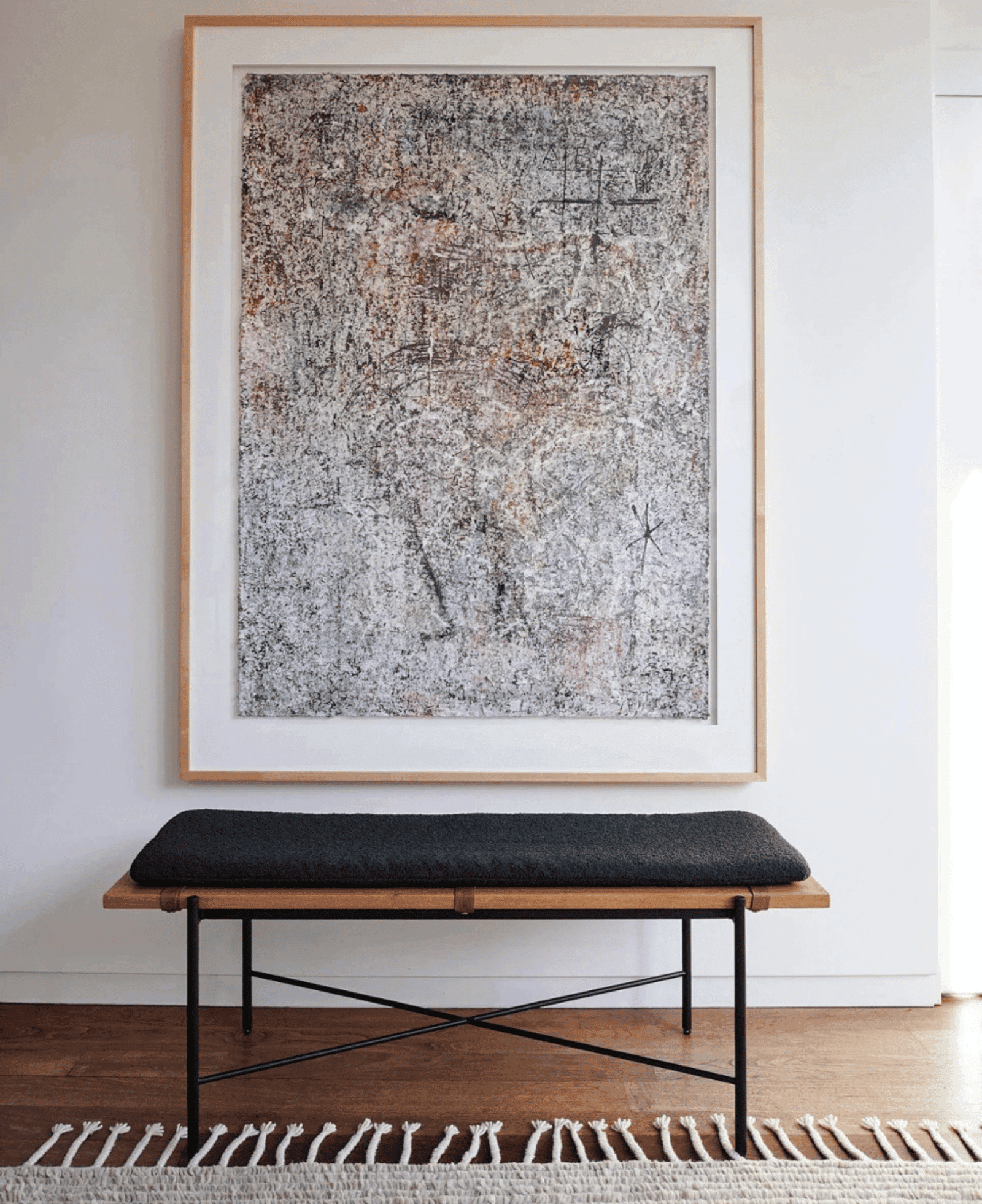
A small bench, stool, or chair provides a convenient place to sit while putting on shoes or organizing bags before leaving the house. Moreover, seating softens the room and creates a relaxed atmosphere.
Several seating styles work beautifully in entryways:
Entryway benches
These offer both seating and storage beneath the seat. Shop Now
Accent chairs
Ideal for larger foyers where extra furniture enhances balance. Shop Now
Small stools
Compact and versatile for smaller spaces. Shop Now
Placing a cushion or throw on the bench adds warmth and texture while enhancing comfort.
Elevate Your Home
Anchor the Entryway With a Console Table
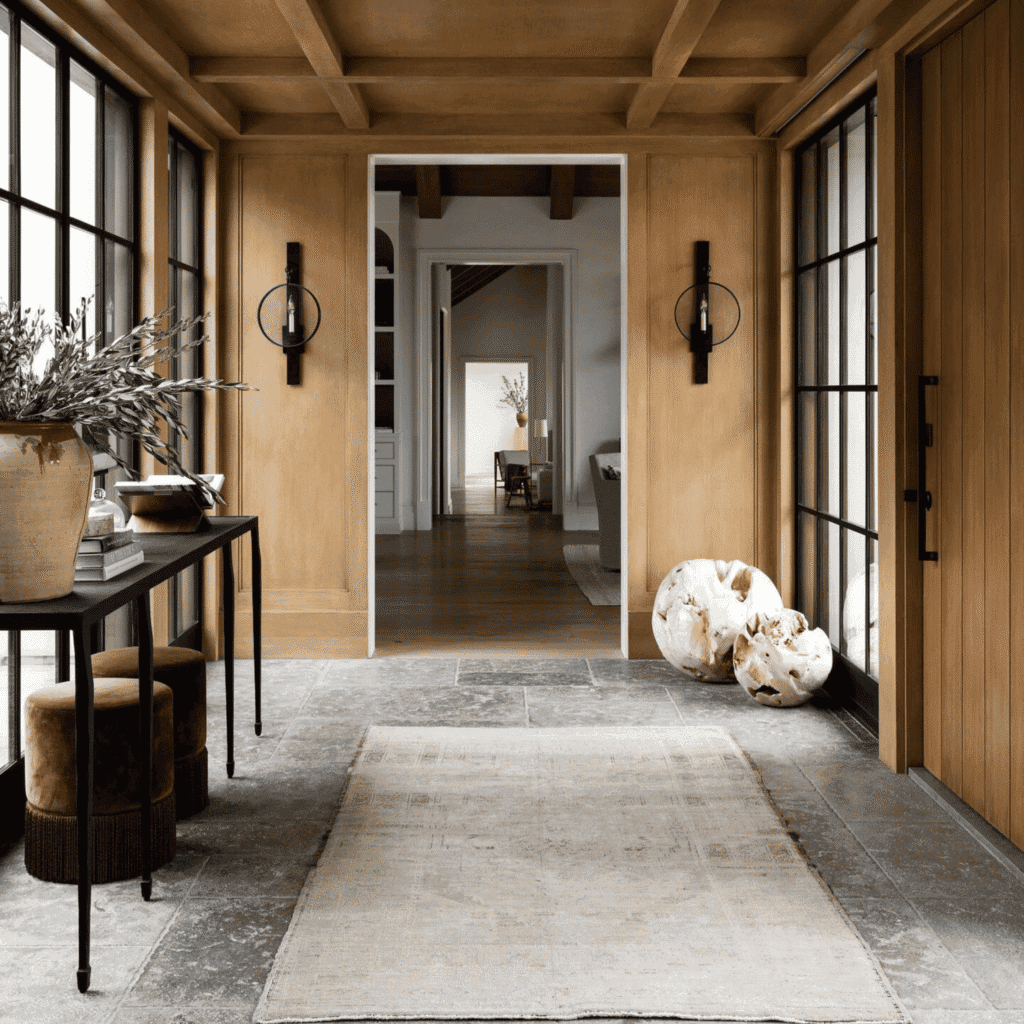
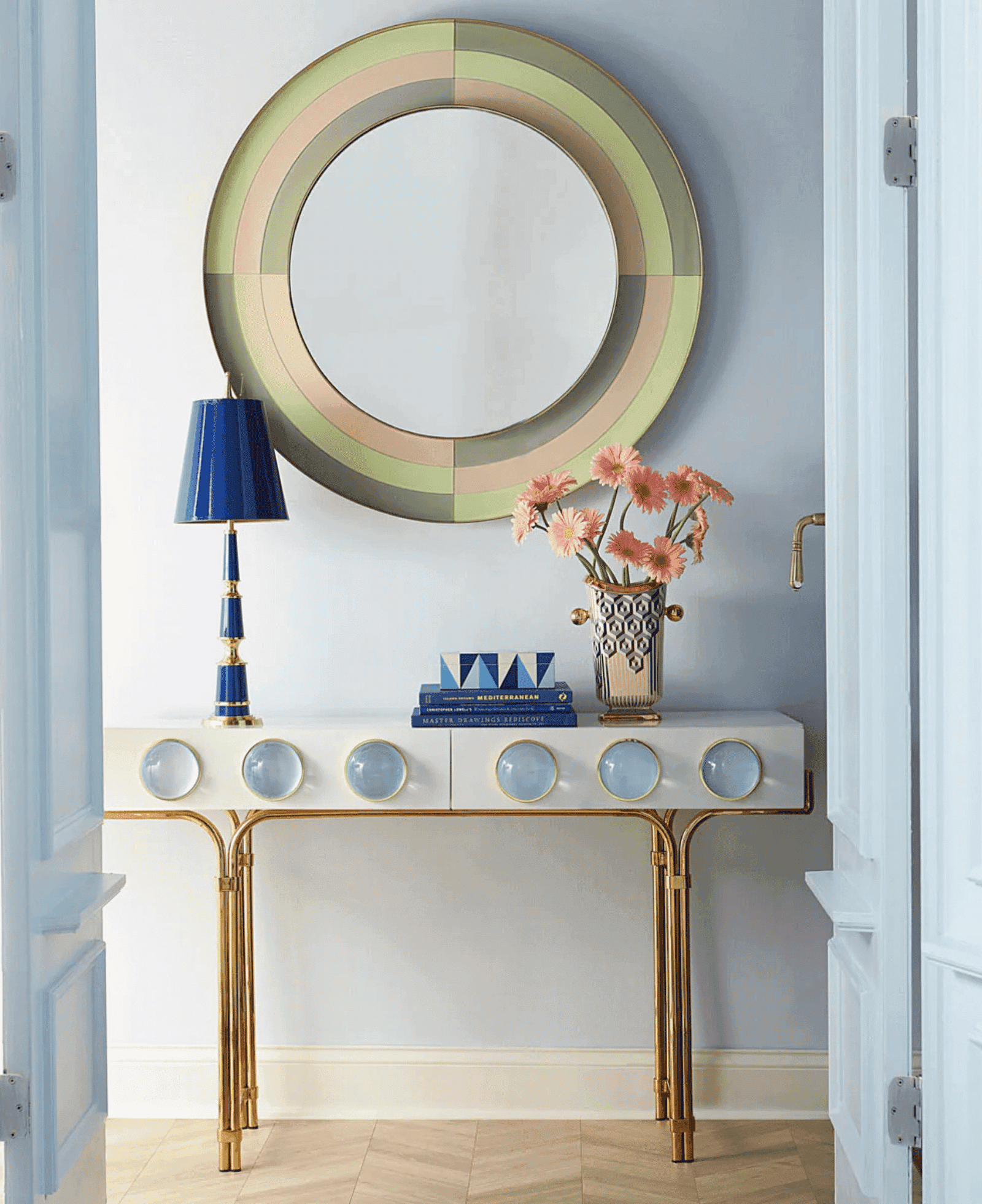
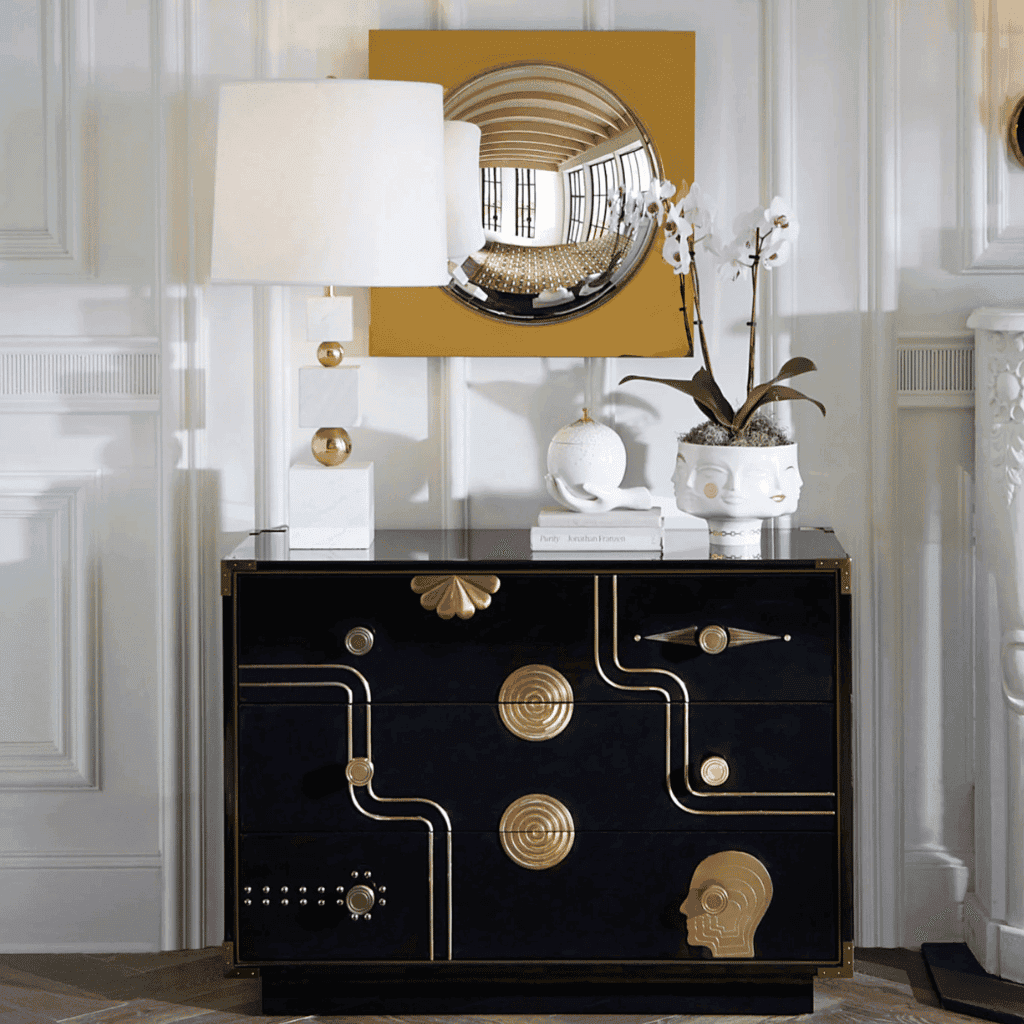
A console table is often the centerpiece of a well-designed entryway. It provides a surface for decorative styling while offering practical storage.
Because console tables are typically narrow, they fit easily along walls without obstructing walkways.
Styling a console table effectively can elevate the entire space. Consider layering the following elements:
• Decorative trays for keys and small items
• Table lamps for soft lighting
• Vases with fresh flowers or greenery
• Sculptural objects or books
Meanwhile, maintaining balance is key. Too many objects can feel cluttered, while minimal styling keeps the space calm and elegant.
Layer Decorative Accessories Thoughtfully
Once the primary elements are in place, decorative accessories bring the entryway to life.
These finishing touches add personality while enhancing visual depth. However, restraint is important. A few carefully chosen items often feel more sophisticated than excessive decor.
Consider adding:
• Ceramic vases or sculptural vessels
• Decorative trays for organization
• Fresh flowers or greenery
• Small table lamps for ambiance
Alt text: stylish foyer console table with decorative accessories and flowers
Together, these pieces create a welcoming atmosphere that feels curated rather than staged.
Balance Functionality and Style
Designing an inviting entryway requires a careful balance between style and everyday practicality.
Because this space experiences constant traffic, durability and organization are essential. However, thoughtful design choices ensure that functionality does not compromise aesthetics.
Focus on the following principles:
• Maintain clear walking paths
• Use multi-functional furniture
• Incorporate layered lighting
• Keep surfaces organized
By combining these strategies, the entryway remains both visually appealing and highly practical.
Create a Cohesive Design Story
Finally, the entryway should reflect the overall design language of the home.
If your home features modern interiors, the entryway should echo that aesthetic through furniture and finishes. Similarly, traditional homes benefit from classic materials and timeless details.
Consistency helps the entryway feel like a natural extension of the rest of the house rather than a disconnected space.
Color palettes, textures, and materials should therefore align with nearby rooms.
Conclusion: Designing an Inviting Entryway That Welcomes Everyone
An entryway may be small, yet its impact is enormous. With thoughtful design choices, this transitional space becomes a welcoming introduction to your home.
By incorporating inviting entryway design tips such as statement lighting, elegant mirrors, functional storage, and stylish seating, you can create a space that feels both practical and beautiful.
Meanwhile, decorative elements like artwork, rugs, and console tables add personality and warmth. Together, these components form a balanced and refined environment that reflects your personal style.
Ultimately, a well-designed entryway sets the tone for the entire home. It greets guests, organizes everyday essentials, and creates a moment of beauty each time you walk through the door.
When thoughtfully curated, your entryway becomes more than a passageway. It becomes a welcoming space that truly feels like home.