
Affiliate Disclosure: Some links on this page are affiliate links. If you purchase an item through one of our affiliate links, LXURI may earn a commission at no additional cost to you. Our partnerships may influence which products or brands we feature, but they do not determine our editorial opinions or recommendations.
Elevate Everyday with KitchenAid Espresso Machines
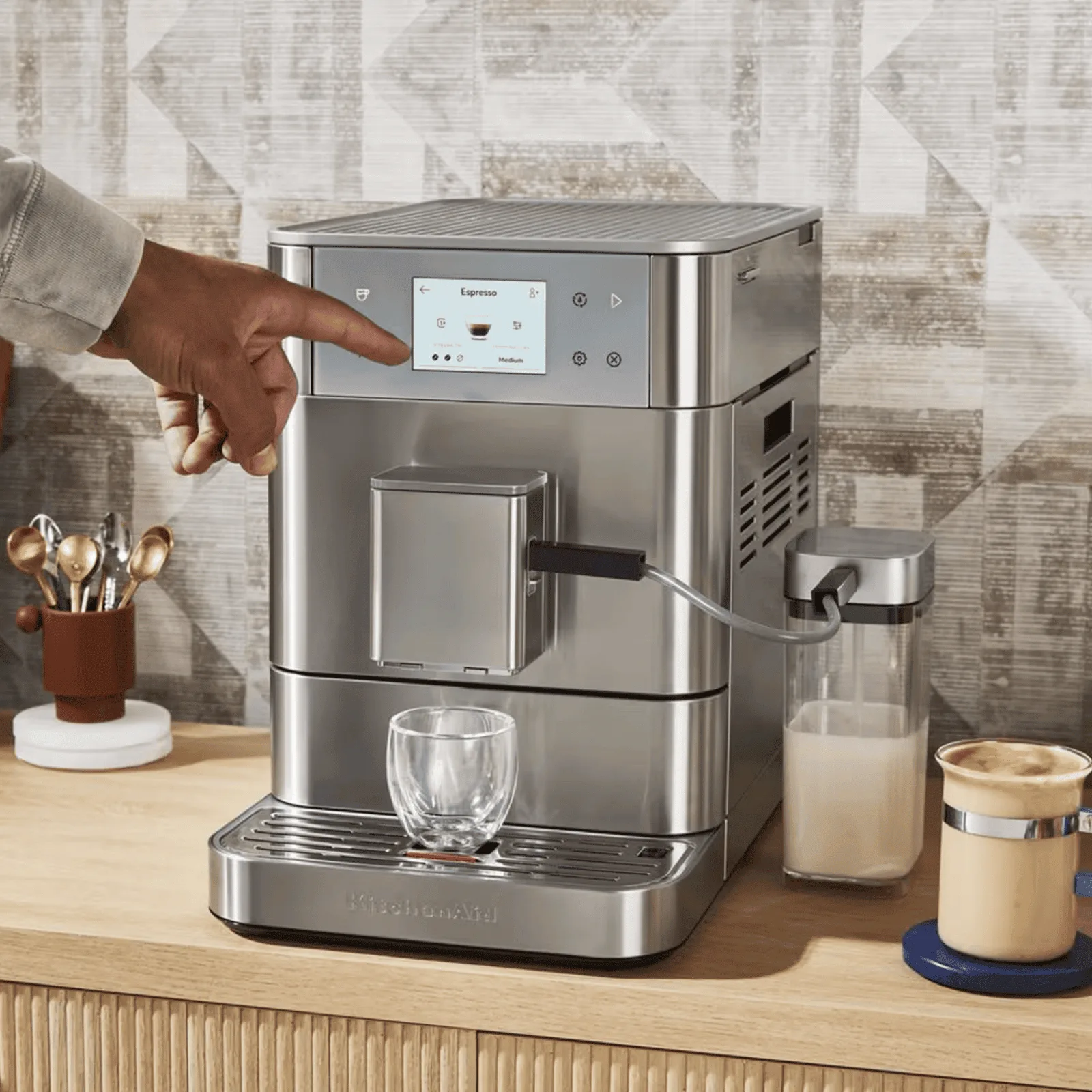
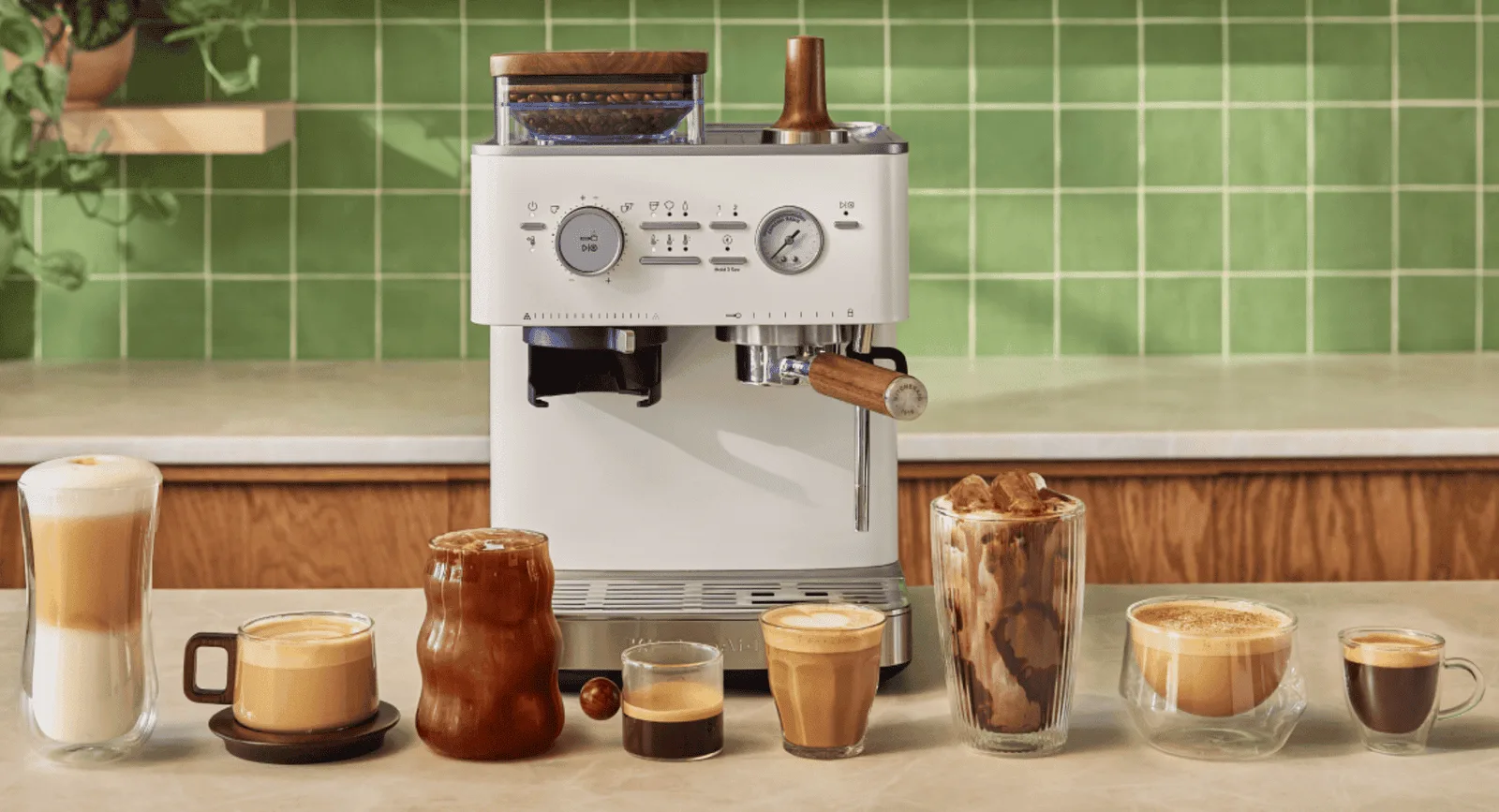
For coffee lovers who value both design and performance, KitchenAid has become a trusted name in premium kitchen appliances. While the brand is best known for its iconic stand mixers, KitchenAid espresso machines now deserve equal attention. Designed for modern kitchens and discerning home baristas, KitchenAid’s fully automatic and semi-automatic espresso machines blend craftsmanship, innovation, and user-friendly technology.
However, choosing between a fully automatic and a semi-automatic espresso machine can feel overwhelming. Each offers a distinct experience, serving different skill levels and lifestyles. Therefore, this in-depth review explores both categories in detail, covering features, performance, pros, cons, and clear reasons to buy. By the end, you will know exactly which KitchenAid espresso machine suits your coffee routine best. Check out our blog: How to Brew the Best Espresso at Home.
EXPLORE KITCHENAID ESPRESSO MACHINES
KitchenAid Espresso Machines Overview
KitchenAid’s espresso lineup focuses on precision brewing, premium materials, and intuitive design. Rather than overwhelming users with endless models, the brand keeps its range curated and purposeful. As a result, each machine feels intentional and well-engineered.
What Sets KitchenAid Apart in Espresso Machines
KitchenAid espresso machines stand out for several reasons:
- Design-forward aesthetics that complement luxury kitchens
- Consistent brewing temperature and pressure
- Durable metal construction with minimal plastic feel
- Thoughtful controls designed for both beginners and enthusiasts
In addition, KitchenAid emphasizes reliability and long-term usability. This makes its espresso machines appealing for daily use rather than occasional indulgence.
Understanding Fully-Automatic vs Semi-Automatic Espresso Machines
Before diving into specific reviews, it helps to understand the core difference between these two espresso styles.
Fully-Automatic Espresso Machines Explained
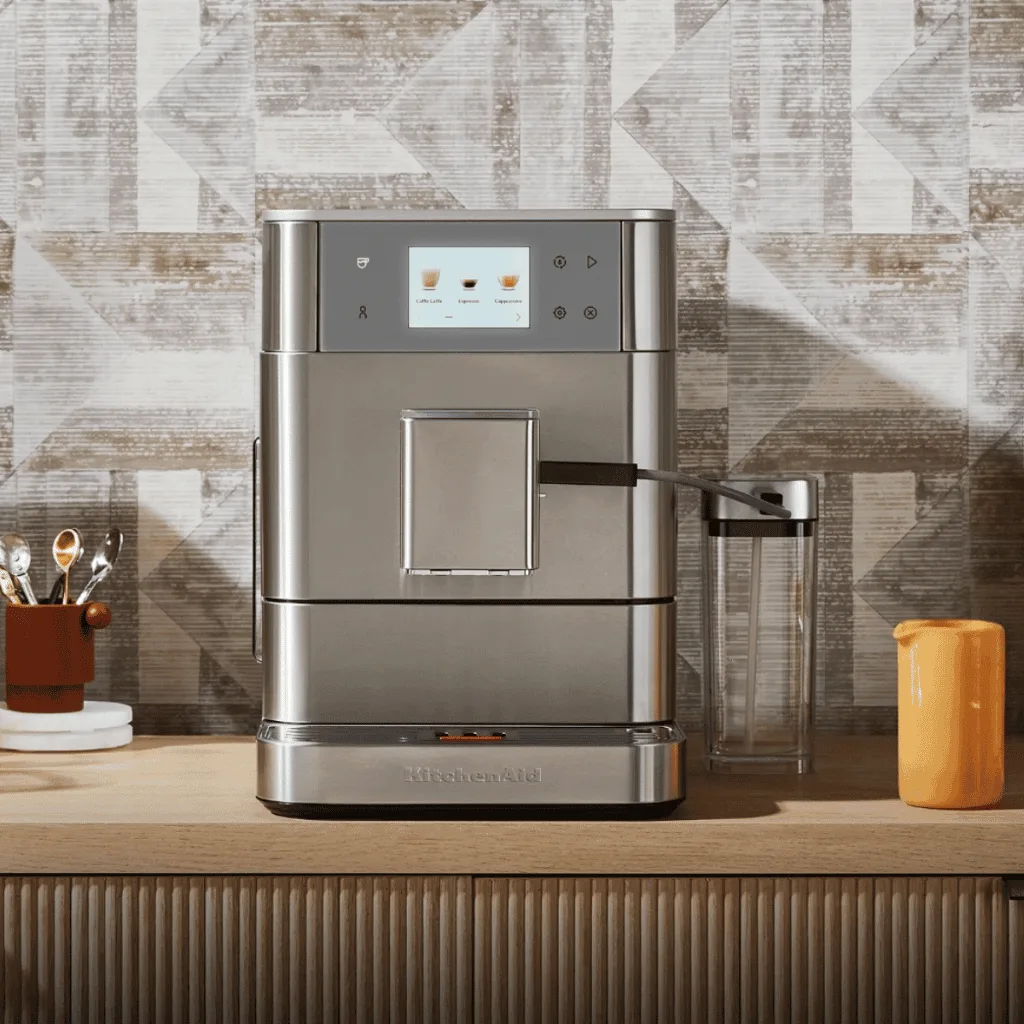
Fully automatic KitchenAid espresso machines handle nearly every step of the brewing process. With the press of a button, the machine grinds beans, tamps coffee, extracts espresso, and often froths milk.
These machines prioritize:
Speed and convenience
Consistency from cup to cup
Minimal user input
As a result, they are ideal for busy households or anyone who wants café-quality espresso without learning barista techniques.
SHOP FULLY-AUTOMATIC ESPRESSO MACHINES
Semi-Automatic Espresso Machines Explained
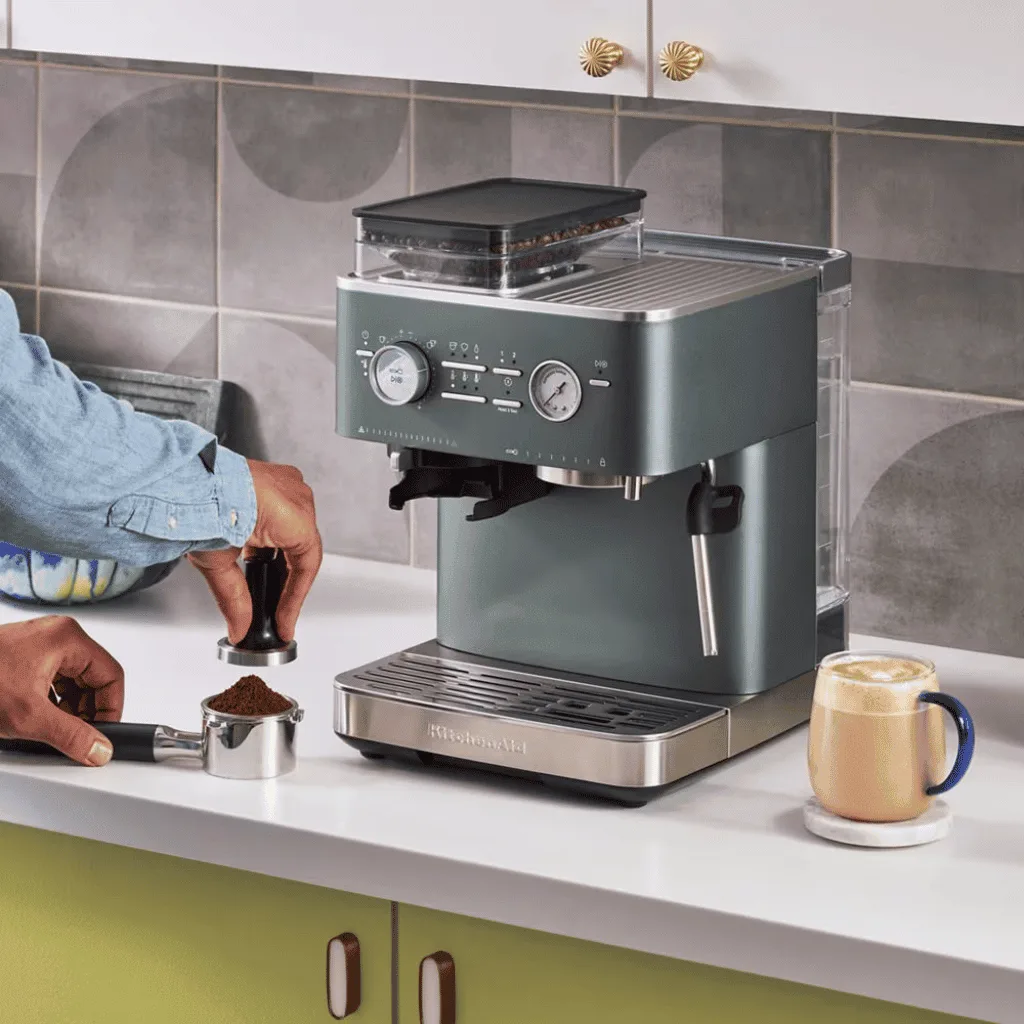
Semi-automatic espresso machines give the user more control. You handle grinding, tamping, and shot timing, while the machine manages pressure and temperature.
These machines appeal to:
Coffee enthusiasts who enjoy hands-on brewing
Users who want to refine technique over time
Espresso lovers seeking customization
Therefore, semi-automatic machines reward skill and experimentation but require more effort.
SHOP SEMI-AUTOMATIC ESPRESSO MACHINES
KitchenAid Fully-Automatic Espresso Machines Review
Design and Build Quality
KitchenAid fully automatic espresso machines feature sleek, modern silhouettes with a premium finish. Stainless steel accents, intuitive touch interfaces, and compact footprints make them suitable for both large and small kitchens.
Moreover, the build quality feels solid. Buttons respond smoothly, water tanks slide easily, and bean hoppers seal tightly to preserve freshness. Overall, the machines feel designed for long-term daily use.
Key Features of KitchenAid Fully-Automatic Espresso Machines
Integrated Grinder System
The built-in grinder automatically measures and grinds beans for each shot. This ensures consistent particle size, which directly impacts extraction quality. Meanwhile, adjustable grind settings allow users to fine-tune flavor.
One-Touch Brewing
With programmable drink options, users can brew espresso, lungo, or coffee drinks at the push of a button. Therefore, even beginners can achieve reliable results immediately.
Automatic Milk Frothing
Many models include integrated milk systems that froth milk automatically. Whether you prefer cappuccinos or lattes, the milk texture remains smooth and balanced.
Temperature and Pressure Stability
Consistent brewing temperature and pressure ensure balanced extraction. As a result, shots taste smooth rather than bitter or sour.
Performance and Espresso Quality
In daily use, KitchenAid fully-automatic espresso machines deliver impressively consistent espresso. Crema forms evenly, flavors remain balanced, and milk foam feels silky rather than airy.
While fully-automatic machines may not allow extreme customization, they excel in reliability. Therefore, users can expect excellent espresso without constant adjustments.
Pros & Cons of KitchenAid Fully-Automatic Espresso Machines
Pros
- Exceptional convenience and speed
- Consistent espresso quality
- Built-in grinder saves counter space
- Ideal for beginners and busy households
- Minimal cleanup required
Cons
- Higher price compared to entry-level machines
- Less control for advanced users
- Integrated components may require professional servicing
Reasons to Buy a KitchenAid Fully-Automatic Espresso Machine
Choose a KitchenAid fully-automatic espresso machine if you value simplicity, consistency, and modern convenience. This option suits households that want café-quality drinks without mastering espresso techniques.
KitchenAid Semi-Automatic Espresso Machines Review
Design and Build Quality
KitchenAid semi-automatic espresso machines maintain the brand’s refined aesthetic while leaning into a more traditional espresso design. Manual controls, solid portafilters, and visible pressure gauges create a professional feel.
In addition, the machines feel sturdy and well-balanced. Heavy components reduce vibration during extraction, which improves shot stability.
Key Features of KitchenAid Semi-Automatic Espresso Machines
Commercial-Style Portafilter
The portafilter feels weighty and well-crafted. This improves heat retention and allows for more consistent extraction.
Manual Shot Control
Users control shot timing, allowing experimentation with grind size, dose, and extraction length. Therefore, flavor customization becomes a rewarding process.
Powerful Steam Wand
The steam wand delivers strong, dry steam. As a result, users can create microfoam suitable for latte art with practice.
Stable Brewing Temperature
KitchenAid’s temperature control ensures consistent water heat, which is critical for balanced espresso.
Performance and Espresso Quality
When dialed in correctly, KitchenAid semi-automatic espresso machines produce rich, complex espresso. Flavors feel nuanced, crema appears thick, and milk texture reaches café standards.
However, results depend heavily on user skill. Therefore, beginners may face a learning curve before achieving perfect shots.
Pros and Cons of KitchenAid Semi-Automatic Espresso Machines
Pros
- Greater control over espresso flavor
- Professional-style brewing experience
- High-quality steam wand performance
- Durable, premium construction
- Ideal for coffee enthusiasts
Cons
- Requires time and practice
- No built-in grinder
- Slower workflow compared to automatic models
Reasons to Buy one of the KitchenAid Semi-Automatic Espresso Machines
Choose a KitchenAid semi-automatic espresso machine if you enjoy learning, experimenting, and refining your coffee skills. This option suits espresso lovers who see brewing as a ritual rather than a shortcut.
SHOP KITCHENAID ESPRESSO MACHINES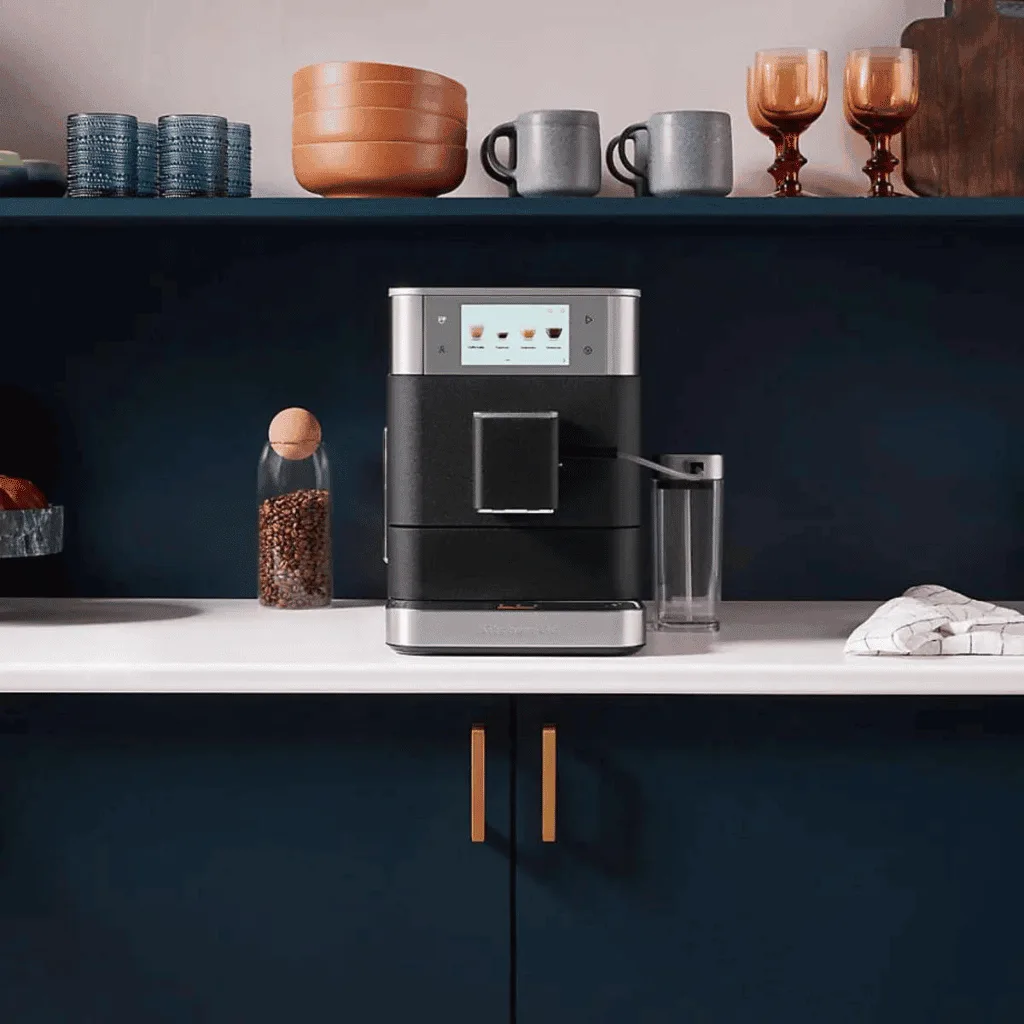

Fully-Automatic vs Semi-Automatic: Which of the KitchenAid Espresso Machines Should You Choose?
The decision ultimately depends on lifestyle and preferences.
Choose Fully-Automatic If You Want:
- Effortless daily espresso
- Consistency with minimal input
- A family-friendly coffee solution
Choose Semi-Automatic If You Want:
- Hands-on control
- Espresso customization
- A barista-style experience at home
Therefore, neither option is better universally. Instead, each excels in its own way.
Maintenance and Long-Term Ownership
Both machine types require regular care. However, maintenance differs slightly.
Fully-automatic machines often include automatic cleaning cycles. Meanwhile, semi-automatic machines require manual cleaning of portafilters and steam wands.
With proper care, KitchenAid espresso machines are built to last. Moreover, their solid construction supports years of consistent performance.
Who Should Invest in one of the KitchenAid Espresso Machines?
KitchenAid espresso machines appeal to:
- Design-conscious homeowners
- Coffee lovers seeking premium quality
- Users upgrading from capsule machines
- Anyone building a luxury home coffee setup
Because KitchenAid balances performance with aesthetics, its machines feel like long-term investments rather than short-term gadgets.
Final Verdict: Are KitchenAid Espresso Machines Worth It?
KitchenAid’s fully-automatic and semi-automatic espresso machines deliver impressive quality, thoughtful design, and reliable performance. While they sit in a premium price category, they justify the investment through durability, consistency, and elevated coffee experiences.
Ultimately, if you want convenience, choose fully-automatic. If you crave control, choose semi-automatic. Either way, KitchenAid offers a refined path to exceptional espresso at home.
Conclusion: KitchenAid Espresso Machines
In conclusion, KitchenAid espresso machines prove that thoughtful design and serious coffee performance can coexist. By offering both fully-automatic and semi-automatic options, the brand meets the needs of casual drinkers and dedicated enthusiasts alike.
Whichever path you choose, KitchenAid transforms everyday coffee into a daily luxury—one perfectly brewed cup at a time.
Explore LXURI Editorial Content
- The KitchenAid 2024 Design Series Stand Mixer in Evergreen
- Soups to Cozy Up With This Fall
- The Ultimate Healthy Green Smoothie Recipe
- The Ultimate Cinnamon Roll Recipe
- Healthy Breakfast Smoothie Recipe: The Ultimate Morning Blend
- The Perfect Chocolate Cake Recipe
- The LXURI March Madness Sales Event

Resort vs. Boutique Hotel: Which Is Right for Your Trip?
Should your hotel be the destination or your base for exploring? Compare luxury resorts and boutique hotels, understand the[…]

Cashmere Buying Guide: How to Evaluate Quality
What makes cashmere worth the investment? Learn how to assess fibres, construction, fit and care requirements, then explore Pura[…]

Italian Glamour: The Etro Holiday Capsule at Mytheresa
Explore the Etro Holiday Capsule at Mytheresa, where signature paisley prints meet plush velvet and expressive eveningwear. Discover how[…]

Noah Kahan: The Sound, Story and Style of a Folk-Pop Star
From his rural Vermont roots to sold-out stadiums, Noah Kahan has turned deeply personal stories into a shared soundtrack.[…]

Ultra Chic Fall 2026 Boot Trends
Sleek heels, rich brown suede and polished riding boots set the mood for autumn. Discover LXURI’s edit of standout[…]

Four Seasons of The White Lotus and Four Stunning Luxury Hotels
From Maui’s golden shores to the glamour of the French Riviera, explore the luxury hotels behind The White Lotus.[…]